
Confused between saving and investing? Learn the key differences, benefits, risks, and which option helps grow your wealth faster in 2026. A complete beginner-friendly guide.
Introduction
Money is an important part of our life. We earn money by working hard, and we want to use it wisely. Two common ways to manage money are saving and investing. Many people think saving and investing are the same, but they are actually different. Both are important for a safe and successful financial future.
Understanding the difference between saving and investing helps us make better money decisions. Saving keeps our money safe for short-term needs, while investing helps our money grow over time. In this article, we will explain saving and investing in very simple words. You will learn their meaning, benefits, risks, examples, and when to choose saving or investing.

What is Saving?
Saving means keeping a part of your money aside for future use. Usually, savings are kept in safe places like a savings bank account, fixed deposit, or cash at home. The main goal of saving is safety and easy access to money.
Key Features of Saving
- Very low risk
- Money is safe
- Easy to withdraw
- Low return (interest is small)
Examples of Saving
- Keeping money in a savings account
- Fixed deposits (FD)
- Recurring deposits (RD)
- Cash saved at home
Saving is best for short-term goals like emergency needs, school fees, medical expenses, or daily expenses.
What is Investing?
Investing means using your money to earn more money in the future. In investing, you put your money into assets like stocks, mutual funds, real estate, or gold. The main aim of investing is wealth growth.

For reliable financial knowledge, beginners can refer to official resources by SEBI for investment education and RBI for saving-related information, which explain money management in a simple and transparent way.
Key Features of Investing
- Higher risk than saving
- Money grows over time
- Not always easy to withdraw quickly
- Higher returns possible
Examples of Investing
- Shares (stocks)
- Mutual funds
- Real estate
- Gold
- Bonds
Investing is best for long-term goals like buying a house, children’s education, or retirement planning.
Investors who want safe returns within a short period can explore these Best Short Term Investment Plans with High Returns in India 2026
Difference Between Saving and Investing
Below is a simple explanation of the difference between saving and investing:
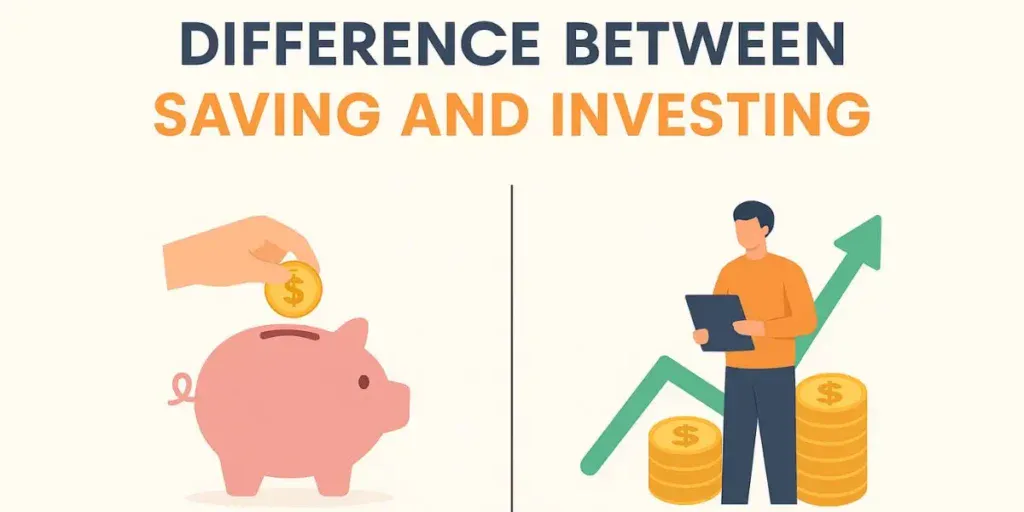
1. Purpose
- Saving: Safety and emergency use
- Investing: Growth of money
2. Risk
- Saving: Very low risk
- Investing: Medium to high risk
3. Returns
- Saving: Low returns
- Investing: Higher returns over time
4. Time Period
- Saving: Short-term
- Investing: Long-term
5. Liquidity
- Saving: Easy to access
- Investing: May take time to withdraw
Key Difference Between Saving and Investing
| Factor | Saving | Investing |
|---|---|---|
| Risk | Very Low | Medium to High |
| Returns | Low | Higher Potential |
| Purpose | Safety | Wealth Growth |
| Time Horizon | Short-term | Long-term |
“Savings or Investments? Which Option Is Best for Your Financial Portfolio – Times of India”
Why is Saving Important?
Saving is the first step in financial planning. Everyone should have savings before starting to invest.

Benefits of Saving
- Helps during emergencies
- Gives financial security
- Builds good money habits
- Reduces stress
Saving money makes you feel safe because you know you have money for unexpected situations.
Why is Investing Important?
Saving alone is not enough to beat inflation. Investing helps your money grow faster.
Benefits of Investing
- Beats inflation
- Builds wealth
- Helps achieve big goals
- Improves financial future
Investing is necessary if you want your money to work for you.
If you want to improve your financial life, start by building strong saving habits. You can learn practical tips in our guide How to Save Money: 25 Simple Habits That Actually Work.
Saving vs Investing: Which is Better?
Many people ask: Which is better, saving or investing?

The answer is both are important.
- Saving is best for short-term needs
- Investing is best for long-term goals
A smart person first saves money for emergencies and then invests for future growth.
If you are planning for long-term financial security, it is important to compare popular retirement options like NPS vs PPF: Which is Better Investment for Retirement in India?
When Should You Save?
You should save money when:
- You need money soon
- You want emergency funds
- You want safety
- You are a beginner
Experts suggest keeping at least 6 months of expenses as savings.
When Should You Invest?
You should invest money when:
- You have extra money after saving
- Your goal is long-term
- You can take some risk
- You want higher returns
Investing works best when you stay patient and invest regularly.
Common Mistakes People Make
1. Only Saving, Not Investing
Saving alone gives very low returns and cannot grow wealth.
2. Investing Without Savings
Investing without emergency savings can cause problems during emergencies.
3. Fear of Risk
Some people avoid investing due to fear, but controlled risk is necessary for growth.
Saving and Investing Example
Imagine you save ₹1,000 in a bank account. After one year, you may get ₹1,030.
Now imagine you invest ₹1,000 in a mutual fund. After a few years, it may become ₹1,500 or more.
This example clearly shows the difference between saving and investing.
Saving And Investing Chart
| Feature | Saving 💰 | Investing 📈 |
|---|
| Meaning | Paisa safe jagah par rakhna | Paisa grow karne ke liye assets me lagana |
| Risk Level | Very Low | Medium to High |
| Returns | Low (3–7%) | Higher potential (8–15%+) |
| Liquidity | High (jaldi nikal sakte hain) | Depends on investment type |
| Goal | Safety & emergency fund | Wealth creation |
| Time Horizon | Short-term | Long-term |
| Examples | Savings Account, FD, RD | Mutual Funds, Stocks, Real Estate |
| Inflation Impact | Inflation se returns kam ho sakte hain | Inflation ko beat karne ka chance |
Conclusion
The difference between saving and investing is simple but very important. Saving keeps your money safe and helps in emergencies. Investing helps your money grow and build wealth over time. Both saving and investing play an important role in financial life.
A smart financial plan includes both saving and investing. First, build a strong saving habit. Then, invest wisely for long-term goals. When used together, saving and investing can help you achieve financial security and a better future.
Also read: RD vs FD: Which Is Better in 2026? Returns, Interest Rates & Best Choice
Frequently Asked Questions (FAQs)
Q1: What is the main difference between saving and investing?
Saving focuses on safety and short-term needs, while investing focuses on growth and long-term goals.
Q2: Is saving risk-free?
Yes, saving has very low risk, especially in bank accounts.
Q3: Is investing risky?
Yes, investing involves risk, but it also offers higher returns.
Q4: Should students save or invest?
Students should start with saving and learn about investing slowly.
Q5: Can I save and invest at the same time?
Yes, the best plan is to save for emergencies and invest for future goals.