
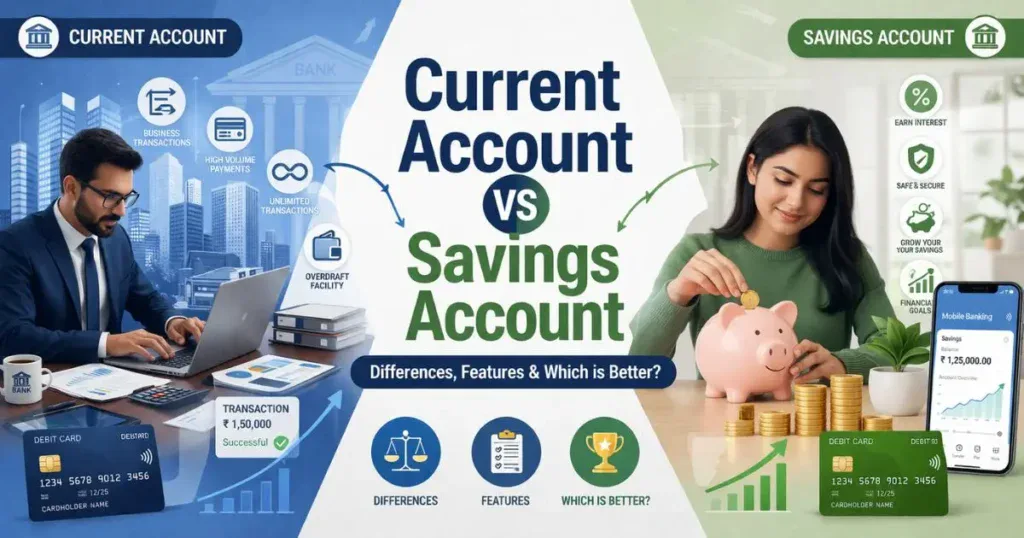
Managing money starts with choosing the right bank account. However, many people still do not understand the difference between a current account and a savings account.
Choosing the wrong account can affect your daily transactions, savings goals, and even business growth.
When opening a bank account, you will usually find two common options: a savings account and a current account. While both are useful, they serve different purposes and are designed for different users.
In this guide, you’ll learn the complete current account vs savings account comparison, including features, benefits, eligibility, and which account is best for your needs. If you’re wondering what is saving account and current account, this article explains everything in simple language. You’ll also learn what are the benefits of current account and savings account so you can make the right banking decision.
What is a Savings Account?
A savings account is a bank account designed mainly for saving money safely while earning interest. It is one of the most common banking accounts used by individuals.

If you are asking what is saving and current account, a savings account is mainly for personal use, while a current account is for business transactions.
Features of a Savings Account
- Earns interest on deposited money
- Low or zero minimum balance (depends on bank)
- Limited number of monthly transactions
- Easy to open and manage
- Provides ATM card, internet banking, and mobile banking
Who Should Use a Savings Account?
A savings account is ideal for:
- Students
- Salaried employees
- Housewives
- Retired individuals
- Anyone looking to save money safely
A savings account can help you build financial security—learn more in What is an Emergency Fund? Benefits, Importance, and How to Build It.
What is a Current Account?
A current account is mainly designed for businesses, traders, and professionals who make frequent transactions every day.
In the discussion of current vs savings account, a current account focuses more on smooth business operations rather than earning interest.
Features of a Current Account
- No interest is given on balance
- Unlimited transactions
- Higher minimum balance required
- Overdraft facility available
- Ideal for business transactions
Who Should Use a Current Account?
A current account is best for:
- Business owners
- Traders
- Companies and firms
- Shop owners
What Are the Benefits of Current Account and Savings Account?
Both account types offer unique advantages depending on your financial goals.
Benefits of a Savings Account
- Earn interest on your deposited money
- Helps build saving habits
- Safe place to keep emergency funds
- Suitable for salary credits and daily expenses
- Easy access through ATM, mobile banking, and internet banking
Benefits of a Current Account
- Supports unlimited business transactions
- Enables quick payments and collections
- Offers overdraft facilities for short-term cash needs
- Helps manage business cash flow efficiently
- Ideal for businesses, traders, and professionals
Current Account vs Savings Account: Key Differences
Understanding the current account and saving account difference is important before choosing one.

1. Purpose
- Savings Account: Used for saving money
- Current Account: Used for business transactions
2. Interest
- Savings Account: Earns interest
- Current Account: Usually no interest
3. Transactions
- Savings Account: Limited transactions
- Current Account: Unlimited transactions
4. Minimum Balance
- Savings Account: Low minimum balance
- Current Account: Higher minimum balance
5. Overdraft Facility
- Savings Account: Generally unavailable
- Current Account: Available in most banks
6. Best For
- Savings Account: Personal banking
- Current Account: Business banking
This clearly explains the difference between current and savings account and helps users choose the right option.
The current account savings account difference mainly lies in their purpose. A savings account is designed to help individuals save money and earn interest, while a current account is designed for businesses that require frequent transactions and smooth cash management.
Current Account vs Savings Account: Comprision
| Feature | Savings Account | Current Account |
|---|---|---|
| Purpose | Personal savings | Business transactions |
| Interest | Earns interest | Usually no interest |
| Transactions | Limited | Unlimited |
| Minimum Balance | Low or zero | Higher balance required |
| Overdraft Facility | Not usually available | Available |
| Best For | Students, salaried individuals | Businesses, traders |
| Charges | Lower | Higher |
| Main Benefit | Saves and grows money | Manages business payments |
This quick comparison highlights the key current account savings account difference and helps you decide which account best suits your financial needs.
Difference Between Current and Savings Account
In the current account vs savings account comparison, the right choice depends on your financial needs and usage.
A savings account is best for saving money and earning interest.
A current account is best for businesses that need frequent and large transactions.
If you are searching for what is saving account and current account, remember that a savings account is primarily for personal banking and wealth accumulation, whereas a current account is intended for business operations and high-volume transactions. This is the fundamental current account savings account difference every account holder should understand.
Along with choosing the right account, selecting the right credit card is also important—check out Best Visa Credit Cards in India 2026 – Top Rewards, Cashback & Low Fees.
Which is Better?: Current Account vs Savings Account?
Many people ask, which is better savings or current account?
The answer depends completely on your financial needs.
Choose a Savings Account If:
- You want to save money
- You want to earn interest
- You use the account for salary or daily expenses
- You make fewer transactions
Choose a Current Account If:
- You run a business
- You make frequent transactions
- You need an overdraft facility
- You handle large payments regularly
There is no single best option in the debate of current account vs savings account India. The right account depends on your purpose.
How to Choose the Right Account
Choosing between a savings account and a current account depends on your financial goals, transaction needs, and banking preferences. Understanding the current account savings account difference can help you select the right account for personal or business use.
Before opening an account, ask yourself these important questions:
1. What is Your Financial Goal?
Do you want to save money and earn interest, or do you need an account for managing business transactions? If your goal is personal savings, a savings account may be the better option. For business operations and frequent payments, a current account is more suitable.
2. How Often Will You Use the Account?
If you make a large number of transactions every day, a current account is designed to handle unlimited deposits and withdrawals. A savings account is generally better for regular personal banking activities.
3. Do You Want to Earn Interest?
One of the key differences in the current account vs savings account comparison is interest earnings. Savings accounts offer interest on your balance, while current accounts typically do not.
4. Can You Maintain the Required Minimum Balance?
Different banks have different minimum balance requirements. Savings accounts usually require a lower balance, whereas current accounts often have higher balance requirements.
5. Do You Need Business Banking Features?
If you require services such as overdraft facilities, bulk transactions, or business payment management, a current account can provide these benefits.
Important Things to Consider Before Opening a Bank Account
- Compare different banks carefully
- Check account maintenance charges
- Understand minimum balance rules
- Look for online and mobile banking features
- Read all terms and conditions properly
- Choose a trusted bank with good customer service
Conclusion
Understanding the difference between a current account vs savings account is very important. A savings account helps you save money and earn interest. A current account helps you manage business transactions easily.
Choose the account based on your needs, not just popularity. If used correctly, both accounts can help you manage your money better and reach your financial goals.
Also read:
- How to Build Wealth in Your 40s: 7 Proven Strategies for Financial Freedom.
- How to Save Money: 25 Simple Habits That Actually Work
- Saving vs Investing: Key Differences, Benefits & Which is Better in 2026?
- How to Transfer PF Online in 2026: Step-by-Step Guide (100% Easy Process)
FAQs
Q1. What is the main difference between a current account and a savings account?
The main difference is that a savings account is for saving money and earning interest, while a current account is for business transactions and does not give interest.
Q2. Which account is better for salary?
A savings account is better for salary because it gives interest and is easy to use.
Q3. Can I open both current and savings accounts?
Yes, you can open both accounts and use them for different purposes.
Q4. Does a current account give interest?
No, a current account does not offer interest.
Q5. Is there any limit on transactions in a savings account?
Yes, savings accounts may have limited transactions, depending on the bank.
Q6. Who should open a current account?
Business owners, traders, and companies should open a current account.
Q7. Can You Have Both Accounts?
Yes, you can open both a savings account and a current account.
Many people use:
- A savings account for personal expenses
- A current account for business transactions