
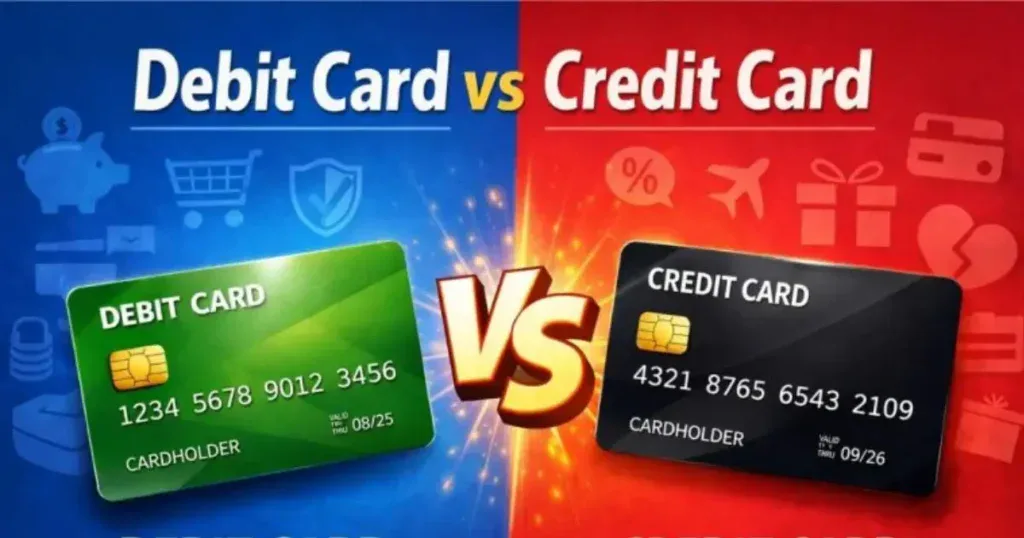
Cashless payments are now a part of everyday life, but many people still do not fully understand the difference between debit card and credit card. While both cards look similar and are used for shopping, bill payments, and online transactions, they work in completely different ways. A debit card lets you spend your own money directly from your bank account, while a credit card allows you to borrow money from the bank and pay it back later.
Choosing the wrong card without understanding its features can lead to overspending, missed payments, or financial stress. That’s why knowing the real Debit Card vs Credit Card difference is very important in 2026.
In this detailed guide on Debit Card vs Credit Card, you will learn how both cards work, their advantages and disadvantages, key differences, and which option is the smarter choice based on your financial needs and spending habits.
What is a Debit Card?
A debit card is a bank-issued card that lets you spend money directly from your bank account. You can only use the funds available in your account, making it ideal for budget-conscious users and daily expenses.
Key Features
- Linked directly to your bank account
- No borrowing or interest involved
- Used for ATM withdrawals, shopping, and online payments
- Helps maintain spending control
- Usually comes with low or zero charges
Example
If your bank balance is ₹10,000, you can spend up to ₹10,000 only using your debit card.
Best For
- Daily expenses
- Budget-conscious users
- Beginners who want to avoid debt
What is a Credit Card?
A credit card is a payment card issued by a bank or financial institution that lets you borrow money up to a pre-approved limit to make purchases or payments, which you repay later.
Key Features
- Spend money even if you don’t have it in your bank account
- Comes with a credit limit
- Offers interest-free period (usually 20–50 days)
- Charges interest if you don’t pay the full bill on time
- Provides rewards, cashback, and offers
Example
If your credit card limit is ₹1,00,000, you can spend up to that amount.
If you repay the full bill before the due date, no interest is charged.
Best For
- Online & international payments
- Building a credit score
- Earning rewards & cashback
- Short-term expenses with discipline
If you are planning to apply for your first credit card after reading this comparison, our guide on Best Credit Cards for Beginners in India (2026 Guide) can help you choose the right option.
Debit Card vs Credit Card: Which is Better?
In the Debit Card vs Credit Card comparison, the better option depends on your spending habits and financial goals.
A debit card is the smarter choice if you:
- Want complete spending control
- Prefer using your own money
- Want to avoid debt and interest
- Need a simple payment option
A credit card is better if you:
- Pay bills on time
- Want cashback and rewards
- Need an interest-free period
- Want to build a strong credit score
Debit card vs Credit card: Key difference
The biggest difference between debit card and credit card is the source of money.
A debit card uses money directly from your bank account. You can only spend the available balance, which helps control spending and avoid debt.
A credit card allows you to borrow money from the bank up to a fixed limit. You repay the amount later, usually with an interest-free period. If not paid on time, interest and penalties apply.
This is the core point in every Debit Card vs Credit Card comparison.
How to Identify Debit Card and Credit Card
Understanding the difference between debit card and credit card is easy if you know what to check.
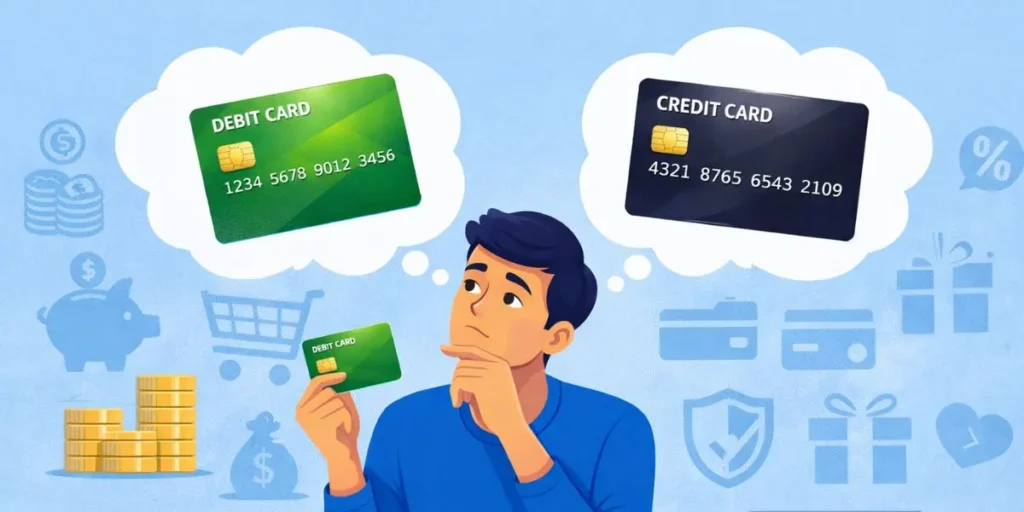
NerdWallet – Credit vs Debit Card
1. Check the Card Type
Most cards clearly mention “Debit Card” or “Credit Card” on the front or back.
2. Check Account Linkage
- Debit card → linked to your savings/current account
- Credit card → linked to a credit limit
3. Check Bank Statements
- Debit card transactions are deducted instantly
- Credit card transactions appear in monthly billing statements
4. Look for Rewards & Billing Cycle
Cards offering cashback, reward points, and billing due dates are usually credit cards.
If you prefer globally accepted cards, you can also explore the Best Visa Credit Cards in India 2026 for more options.
Advantages: Debit Card vs Credit Card
Advantages of a Debit Card
- Spend only your own money
- No interest or debt risk
- Better budget control
- Easy for daily expenses
- Ideal for beginners and students
Advantages of a Credit Card
- Buy now, pay later convenience
- Interest-free period
- Rewards, cashback, and offers
- Builds credit score
- Useful for emergencies
Disadvantages: Debit Card vs Credit Card
Disadvantages of a Debit Card
- Limited rewards and cashback
- Cannot build credit score
- Spending limited to bank balance
- Lower fraud protection than credit cards
Disadvantages of a Credit Card
- Risk of overspending
- High interest on unpaid bills
- Late payments damage credit score
- Annual fees and hidden charges may apply
Debit Card vs Credit Cards: Comparison Table
| Feature | Debit Card | Credit Card |
|---|---|---|
| Source of Money | Directly from your bank account | Borrowed from bank (credit limit) |
| Spending Limit | Up to available bank balance | Pre-approved credit limit |
| Interest Charges | No interest | Charged if bill not paid on time |
| Interest-Free Period | Not available | Usually 20–50 days |
| Rewards & Cashback | Very limited | Available on most cards |
| Credit Score Impact | No impact | Helps build credit score |
| Overspending Risk | Very low | Medium to high |
| Best For | Daily expenses, budgeting | Rewards, flexibility, credit history |
| Ideal Users | Beginners, students, budget-conscious | Disciplined spenders, reward seekers |
| Fraud Protection | Moderate | High, often with insurance or chargeback options |
Conclusion
In the Debit Card vs Credit Card debate, both cards have their own advantages.
A debit card is best for budget control and daily expenses because it uses your own money. A credit card offers rewards, flexibility, and helps build your credit score when used responsibly.
The smartest approach is to use:
- Debit card for routine spending
- Credit card for rewards, online purchases, and emergencies
This balanced strategy helps you manage money smartly while enjoying extra benefits.
Read more:
- Best Credit Cards for Beginners in India 2026
- Best Visa Credit Cards in India 2026 – Top Rewards, Cashback & Low Fees
- How to Build Wealth in Your 40s: 7 Proven Strategies for Financial Freedom 2026
- How to Save Money From Salary: 10 Practical Ways That Work
FAQs
Q1. What is the difference between a debit card and a credit card?
A debit card uses money directly from your bank account, while a credit card allows you to borrow money up to a limit and pay later.
Q2. Which is safer, a debit card or a credit card?
Debit cards are safer for avoiding debt, while credit cards offer better fraud protection and rewards if used responsibly.
Q3. Can I earn rewards with a debit card?
Most debit cards offer very limited rewards, whereas credit cards provide cashback, points, and exclusive offers.
Q4. Does using a credit card affect my credit score?
Yes. Using a credit card responsibly by paying bills on time improves your credit score. Debit cards have no impact on credit scores.
Q5. Which card is better for daily expenses?
A debit card is ideal for daily spending and budgeting, while a credit card is best for rewards, emergencies, and planned expenses.
Q6. Can I use both debit and credit cards together?
Absolutely. Using a debit card for routine expenses and a credit card for rewards or emergencies is the smartest approach.
Q7. How can I identify a debit card vs a credit card?
Check the card itself: most cards have “Debit” or “Credit” printed. Debit cards are linked to your bank account, while credit cards work with a credit limit.