
FD vs PPF: Which is better investment in 2026? Compare returns, tax benefits, lock-in & safety to choose the best option.
Introduction
Looking for a safe and guaranteed investment in India in 2026? When it comes to safe investments in India, the comparison of FD vs PPF 2026 is one of the most searched topics. Many investors want security, guaranteed returns, and tax savings, but they are not sure where to invest their money.
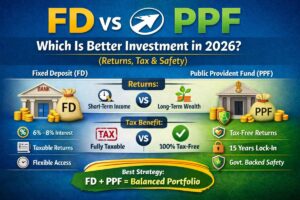
A Fixed Deposit (FD) is simple, flexible, and useful for short-term goals. The Public Provident Fund (PPF) is a government-backed scheme made for long-term savings and retirement. Both are low-risk options, but their purpose is different.
So, FD vs PPF: which is better investment in 2026?
This article explains FD vs PPF returns, tax benefits, safety, lock-in period, liquidity, and suitability in easy English. After reading this, you will know which option is right for you in 2026.
Also read: “RD vs FD: Which Is Better in 2026? Returns, Interest Rates & Best Choice.”
What Is a Fixed Deposit (FD)?
A Fixed Deposit (FD) is a popular investment offered by banks and NBFCs. You invest a lump sum for a fixed time and earn assured interest.
Key Features of Fixed Deposit (FD)
| Feature | FD Details |
|---|---|
| Tenure | 7 days – 10 years |
| Interest Rate (2026) | 6% – 8% (bank wise) |
| Returns | Guaranteed |
| Liquidity | Easy withdrawal (penalty applies) |
| Risk Level | Low |
“If you want to know more about Fixed Deposits, their safety, and regulations, the Reserve Bank of India FD FAQ page is a reliable source.”
What Is Public Provident Fund (PPF)?
The Public Provident Fund (PPF) is a long-term savings scheme supported by the Government of India. It is mainly used for retirement planning and tax saving.
Key Features of Public Provident Fund (PPF)
| Feature | PPF Details |
|---|---|
| Tenure | 15 years (extendable) |
| Interest Rate (2026) | ~7% – 7.5% (Govt decided) |
| Returns | Guaranteed |
| Liquidity | Partial withdrawal after lock-in |
| Risk Level | Very Low (Govt backed) |
| Tax Benefit | EEE (Fully tax-free) |
“For official details about Public Provident Fund (PPF), including interest rates, tenure, and tax benefits, you can check the Government of India PPF page.”
FD vs PPF: Interest Rate & Returns in 2026

FD Returns in 2026
FD interest depends on the bank and tenure. Senior citizens usually get extra interest. However, FD interest is taxable, which reduces real returns.
PPF Returns in 2026
PPF interest is completely tax-free. Even if the interest rate is similar to FD, the net return of PPF is higher due to zero tax.
In FD vs PPF returns 2026,
-
FD suits short-term needs
-
PPF suits long-term wealth creation
FD vs PPF: Tax Benefits Comparison
| Tax Aspect | Fixed Deposit (FD) | Public Provident Fund (PPF) |
|---|---|---|
| Tax on Interest | Fully taxable | Tax-free |
| Income Treatment | Added to total income | Not added to income |
| TDS | Applicable | Not applicable |
| Tax Benefit on Investment | No | Yes (Section 80C) |
| Tax on Maturity | Taxable | Fully tax-free |
Lock-in Period & Liquidity: FD vs PPF

FD Liquidity
-
No strict lock-in
-
Premature withdrawal allowed
-
Suitable for emergencies
PPF Liquidity
-
Lock-in of 15 years
-
Partial withdrawal allowed after few years
-
Best for disciplined savings
If liquidity is your priority, FD is better than PPF.
For retirement-focused investors, you may also read NPS vs PPF: Which Is Better Investment for Retirement in India? to choose the right long-term option.
FD vs PPF: Investment Limits
FD Limits
-
No maximum investment limit
-
Depends on bank policies
PPF Limits
-
Minimum: ₹500 per year
-
Maximum: ₹1.5 lakh per year
PPF is suitable for small, regular, and disciplined investors.
FD vs PPF Comparison (2026)
| Feature | Fixed Deposit (FD) | Public Provident Fund (PPF) |
|---|---|---|
| Investment Type | Bank / NBFC deposit | Govt-backed savings scheme |
| Tenure | 7 days – 10 years | 15 years (extendable) |
| Interest Rate (2026) | 6% – 8% (bank-wise) | ~7% – 7.5% (Govt decided) |
| Returns | Guaranteed | Guaranteed |
| Tax on Returns | Taxable | Fully tax-free (EEE) |
| Liquidity | Easy withdrawal (penalty) | Partial withdrawal after lock-in |
| Risk Level | Low | Very Low |
| Best For | Short-term & emergencies | Long-term & retirement |
| Safety | Bank dependent |
FD vs PPF: Which Is Better for Different Goals?
Emergency Fund
FD is better
Retirement Planning
PPF is better
Tax Saving in 2026
PPF is better
Short-Term Investment
FD is better
Long-term wealth creation ke liye Fixed Deposit vs SIP – Which Is Better Investment in 2025? samajhna bahut zaroori hai.
FD vs PPF: Who Should Invest in 2026?
Choose FD If:
-
You need short-term investment
-
You want regular income
-
You need easy withdrawal
Choose PPF If:
-
You want long-term investment
-
You want tax-free returns
-
You are planning retirement
Understanding who should invest in FD or PPF in 2026 helps you make the right choice.
FD vs PPF: Which Is Better Investment in 2026?
There is no one-size-fits-all answer to FD vs PPF. The best option depends on your financial goals, tax slab, and time horizon.
-
FD is good for flexibility and short-term safety.
-
PPF is ideal for long-term, safe, and tax-free wealth creation.
Many investors wisely invest in both FD and PPF for balance.
Conclusion
The comparison of FD vs PPF in 2026 shows that both are safe and reliable investment options. FD offers liquidity and predictable income, while PPF provides long-term security and tax-free growth.
If your goal is retirement and tax saving, PPF is the better investment in 2026. If you want short-term stability and easy access, FD is the right choice.
For best results, combine FD + PPF in your investment portfolio.
PPF is part of government-backed savings options. You can also check our guide on Latest Small Saving Schemes 2025 to explore other safe investment choices
FAQs – FD vs PPF 2026
1. FD vs PPF: Which is better investment in 2026?
PPF is better for long-term and tax-free returns, while FD is better for short-term needs.
2. Is FD interest taxable in 2026?
Yes, FD interest is taxable as per income tax slab.
3. Is PPF fully tax-free?
Yes, PPF follows the EEE model and is completely tax-free.
4. Is PPF safer than FD?
Yes, PPF is safer because it is government-backed.
5. Can I invest in both FD and PPF?
Yes, investing in both gives safety, liquidity, and balance.
Pingback: 10 Best Ways to Invest Money in 2025 | Smart Beginner Guide - sujeetfinancehub.com
Pingback: Best Debt Investment 2025 in India – Top Safe & Low-Risk Options for Smart Investors - sujeetfinancehub.com