
The RBI is evaluating plastic (polymer) currency notes in India to improve durability, reduce costs, and enhance security. Here’s everything you need to know about the latest RBI update.
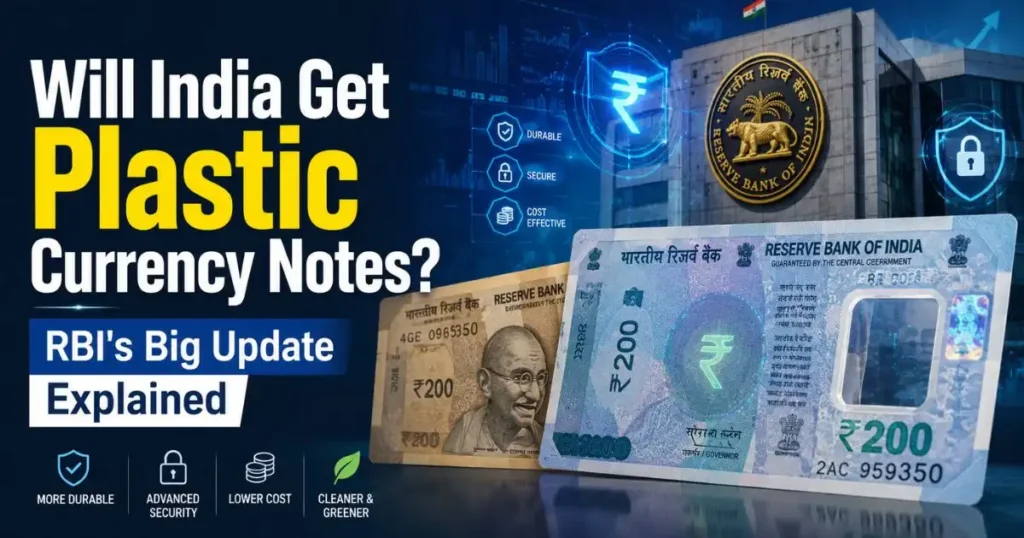
In recent months, a growing buzz has surrounded the question: Will India introduce plastic (polymer) currency notes? With reports suggesting that the Reserve Bank of India (RBI) is reviewing this proposal, many people are curious whether paper money will soon be replaced by durable plastic notes.
According to the Reserve Bank of India (RBI), the proposal for polymer banknotes is currently under evaluation, and no final decision has been announced yet.
In this article, we break down the latest RBI update, what polymer currency notes are, why India is considering them, and whether they will actually be introduced.
What Are Plastic or Polymer Currency Notes?
Plastic currency notes, also known as polymer banknotes, are made from a special type of flexible plastic material instead of traditional cotton-based paper.
These notes are:
- More durable than paper notes
- Resistant to water, dirt, and tearing
- Equipped with advanced security features
- Longer lasting in circulation
Countries like Australia, Canada, and the UK already use polymer banknotes successfully.
What is RBI’s Latest Update on Plastic Notes?
As of the latest update in 2026, the Reserve Bank of India (RBI) has clearly stated:
The proposal for introducing polymer currency notes is under consideration
No final decision has been taken yet
The discussion is still at a preliminary stage
RBI Governor Sanjay Malhotra has confirmed that the central bank is currently evaluating the pros and cons of introducing plastic notes in India before taking any final step.
Readers can check the latest updates on the RBI currency management guidelines and official announcements for more information.
Why is RBI Considering Plastic Currency Notes?
There are several strong reasons why RBI is evaluating polymer notes:
1. Longer Life of Notes
Plastic notes last significantly longer than paper notes, reducing replacement frequency.
2. Lower Printing Costs
India spends thousands of crores annually on printing currency. Polymer notes could reduce this long-term cost.
3. Better Durability in Indian Conditions
India’s climate (humidity, heat, dust) causes paper notes to wear out quickly.
4. Strong Anti-Counterfeit Features
Polymer notes can include advanced security elements like transparent windows and holograms, making fake currency harder to produce.
Will India Really Switch to Plastic Currency?
At this stage, the answer is:
No final decision yet
However, reports suggest that RBI may start with a pilot project, possibly introducing polymer notes in low denominations like:
- ₹10 notes
- ₹20 notes
This would help RBI test durability, usability, and public acceptance before any large-scale rollout.
Is This the First Time India is Considering It?
No. India has explored polymer notes earlier as well, but:
- Earlier attempts remained in planning or pilot discussions
- No nationwide rollout ever happened
The current discussion is essentially a revival of an old proposal, driven by rising costs and high currency demand.
Advantages and Disadvantages of Plastic Currency
Advantages:
- Longer lifespan
- Lower maintenance and replacement cost
- More hygienic (less dirt absorption)
- Stronger security features
Disadvantages:
- Higher initial production cost
- Recycling concerns
- Public adaptation challenges
- Infrastructure changes (ATMs, handling systems)
What It Means for Common People
If India introduces polymer notes:
- Your existing paper currency will remain valid
- New plastic notes will gradually enter circulation
- No demonetisation is expected
- Cash transactions will continue as usual
This is not a sudden currency change but a gradual modernization process.
Conclusion
India is currently exploring the idea of plastic currency notes, but there is no official confirmation of implementation yet. The RBI is still studying its feasibility, benefits, and challenges.
If introduced, polymer notes could make Indian currency more durable, secure, and cost-efficient—but for now, it remains a proposal in discussion stage.
For official announcements regarding Indian currency and banking policies, visit the Reserve Bank of India (RBI) website.
Read more:
- Digital Rupee (e₹): Complete Guide for Beginners
- India Updates FRB 2031 Rate to 6.64% for Next 6 Months
- How to Invest in Bonds in India: Beginner Guide (2026)
- 10 Best Banks for Personal Loans with Low Interest Rates in India 2026
FAQs
Q1. Is India launching new currency notes?
As of now, RBI is only evaluating the proposal. No final decision has been announced regarding the introduction of plastic or polymer currency notes.
Q2. What are plastic currency notes?
Plastic currency notes, also known as polymer banknotes, are made from a special plastic material that is more durable, water-resistant, and secure than traditional paper notes.
Q3. Why is RBI considering polymer notes?
RBI is considering polymer notes because they last longer, offer better security features, reduce replacement costs, and can help combat counterfeit currency.
Q4. Which countries use plastic currency notes?
Several countries already use polymer banknotes, including Australia, Canada, the United Kingdom, New Zealand, and Singapore.
Q5. Will existing paper notes become invalid?
No. If polymer notes are introduced, existing paper currency notes are expected to remain valid and coexist during a gradual transition period.
Q6. Which denominations may be introduced first?
Reports suggest that RBI could begin with a pilot project using lower denominations such as ₹10 and ₹20 notes before considering a wider rollout.
Q7. Are plastic currency notes safer than paper notes?
Yes. Polymer notes can include advanced security features such as transparent windows, holograms, and complex designs that are difficult to counterfeit.
Q8. Has India tested polymer notes before?
Yes. India has explored polymer banknotes in the past, but no nationwide rollout was implemented. The current proposal is a renewed evaluation by RBI.